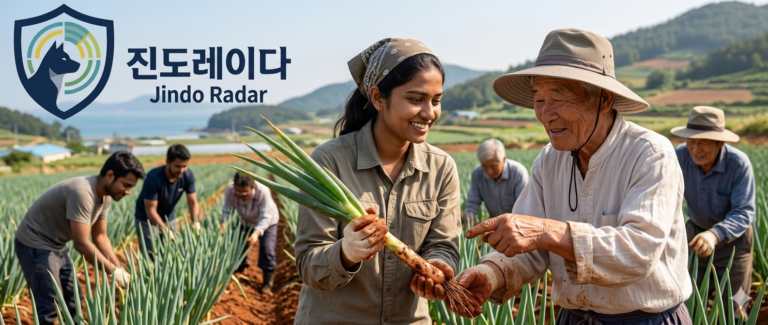
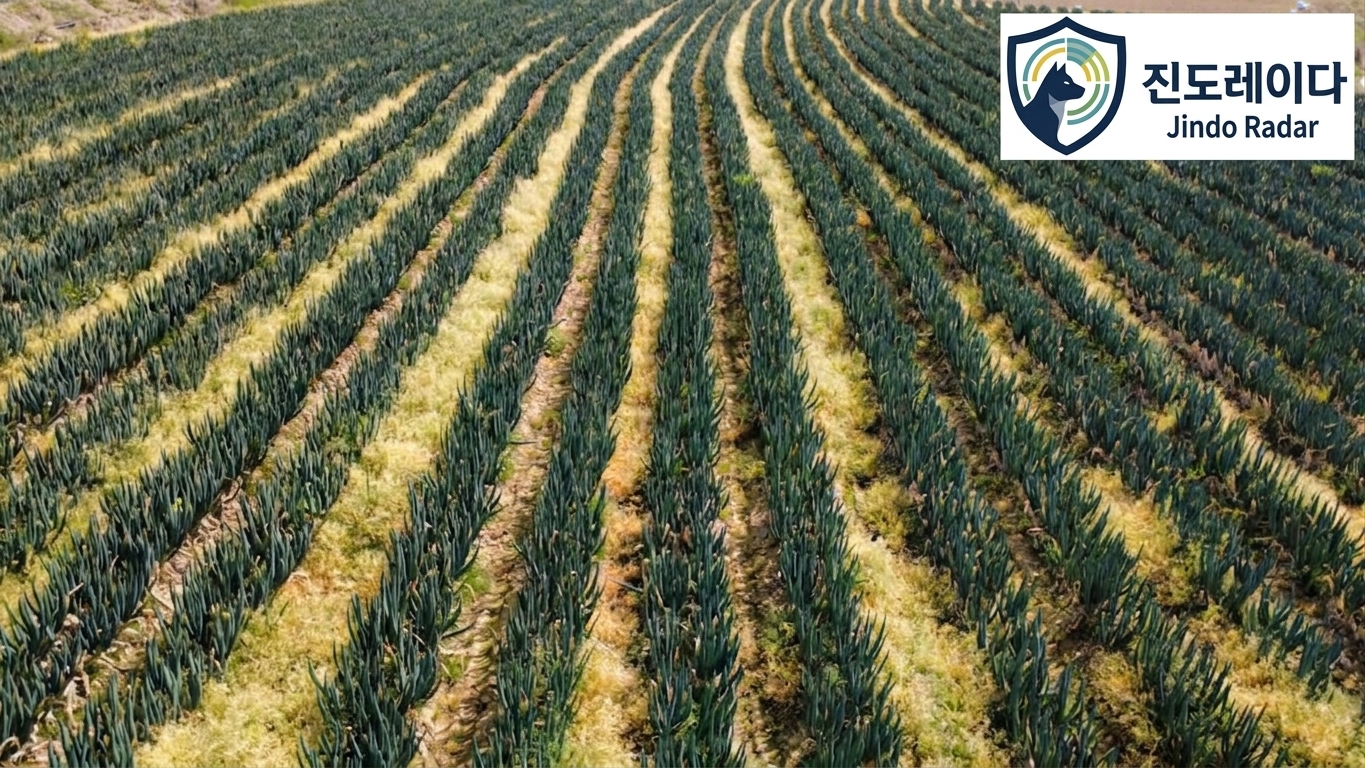
(Jindo=Jindo Radar) Ji Gyeong-jun = The government and local authorities have decided on an emergency injection of 4.6 billion KRW to combat the plummeting prices of green onions in the Jindo region. However, frontline farmers are criticizing the move as “locking the stable door after the horse has bolted.” With the business sentiment of companies in the southwestern Jeolla region rapidly cooling, the collapse of agriculture—the core economic foundation of Jindo County—is being interpreted not merely as a statistical decline, but as a precursor to regional extinction.
Professor Ha-Joon Chang of the University of London has emphasized through his books and economic lectures that “true economics should serve as a protective fence for the weak.” The recent 4.6 billion won injection is nothing more than a stopgap measure. To realize the practical livelihood values of protecting the marginalized and supporting the weak (Eok-gang-bu-yak), structural and permanent safety nets like a ‘Minimum Price Guarantee System for Agricultural Products’ are absolutely essential.
Furthermore, Professor Kang-Rae Ma of Chung-Ang University, when discussing the theory of regional extinction, analyzed that “regional survival begins with a fundamental redesign of space and industry.” This means we must go beyond simply scattering one-time subsidies and instead urgently diversify the primary industrial structure of local governments facing the crisis of extinction, including Jindo.
The concept of the “golden hour for the right to life and safety systems,” which medical expert Professor Cook-Jong Lee so desperately emphasizes, applies equally to the local economy. The ‘golden hour’ for Jindo’s agricultural economy may already be passing us by. What is urgently needed now are not desk-bound administrative policies from the central government, but rather macro-level, field-centered policies that prioritize the practical benefits of Jindo residents above all else.
작성자 소개